


Choosing between Dekton and quartz worktops is one of the most common dilemmas homeowners face when upgrading a kitchen or bathroom. Both materials belong to the engineered stone category, yet they differ significantly in composition, manufacturing process, and everyday performance. The Dekton worktop vs. quartz comparison highlights these differences, helping homeowners understand which surface may better suit their requirements. Quartz, made from natural quartz crystals bound with resin, has long been prized for its scratch resistance and design versatility, while Dekton, an ultra-compact sintered surface, brings superior heat and UV resistance to the table. With price points, maintenance needs, and suitability for indoor versus outdoor use varying between the two, the right pick truly depends on your lifestyle, budget, and design goals. This guide breaks down every factor that matters, so you can make a confident, informed decision for your space.
Dekton and Quartz Worktops OverviewDekton and Quartz are premium worktop materials designed to meet different kitchen requirements, each offering distinct advantages in composition, durability, maintenance, and design versatility. Selecting the right surface depends on your project’s functional demands, aesthetic preferences, and long-term expectations. While Dekton suits design-led, high-performance applications, Quartz provides excellent flexibility for stylish everyday kitchens. Understanding these differences helps ensure a worktop that enhances both the practicality and visual appeal of your kitchen for years to come. |
Comparison Between Dekton And Quartz Worktop
The table below compares the key characteristics of Dekton worktop vs Quartz, helping you understand how each material performs across different everyday kitchen applications.
| Feature | Dekton Worktops | Quartz Worktops |
| Material Composition | Dekton kitchen worktops are made from a sophisticated blend of porcelain, glass, and Quartz particles, creating an ultra-compact surface engineered for demanding kitchen environments. | Quartz worktops are crafted, combined with resins and pigments to produce a durable, non-porous worktop with a refined finish. |
| Durability | Built to handle the demands of busy kitchens while maintaining its strength and appearance over the years. | Designed to provide dependable everyday durability, making it a reliable choice for regular kitchen use. |
| Heat Resistance | Handles high temperatures with confidence, making it well-suited to kitchens where cooking is a daily activity. | Offers reliable heat resistance for everyday cooking, although using trivets or heat pads is recommended for added protection. |
| Scratch Resistance | Its hard, compact surface helps minimise scratches and keeps the worktop looking its best through everyday use. | Stands up well to everyday food preparation and kitchen tasks, helping preserve the surface’s finish over time. |
| Stain Resistance | The non-porous surface prevents liquids from soaking in, making everyday spills easy to wipe away. | Its non-porous construction helps resist common kitchen stains, keeping the worktop looking clean with minimal effort. |
| Maintenance | Requires only routine cleaning with mild household products and never needs sealing. | Simple to care for with regular cleaning, without the need for sealing or specialised maintenance. |
| Design Options | Available in modern colours and finishes inspired by natural stone, concrete, and other architectural materials. | Comes in a wide selection of colours, patterns, and stone-inspired finishes to suit a variety of kitchen styles. |
| Application | A versatile option for exterior cooking spaces, providing a continuous high-performance surface that performs reliably across both indoor and outdoor environments. | Ideal for indoor kitchen worktops in homes and commercial spaces where style and everyday practicality go hand in hand. |
| Appearance Retention | Maintains its colour and finish over time, even in kitchens with plenty of natural sunlight. | Retains its polished appearance with routine care, helping the kitchen maintain a timeless and elegant look. |
After this comparison, you must have understood how quartz and Dekton compare. Another popular question that hits us is, which of these would suit outdoor conditions as well? Well, we have answered this in our blog: Dekton for Outdoor Kitchens: Why It Outperforms in Harsh Weather.
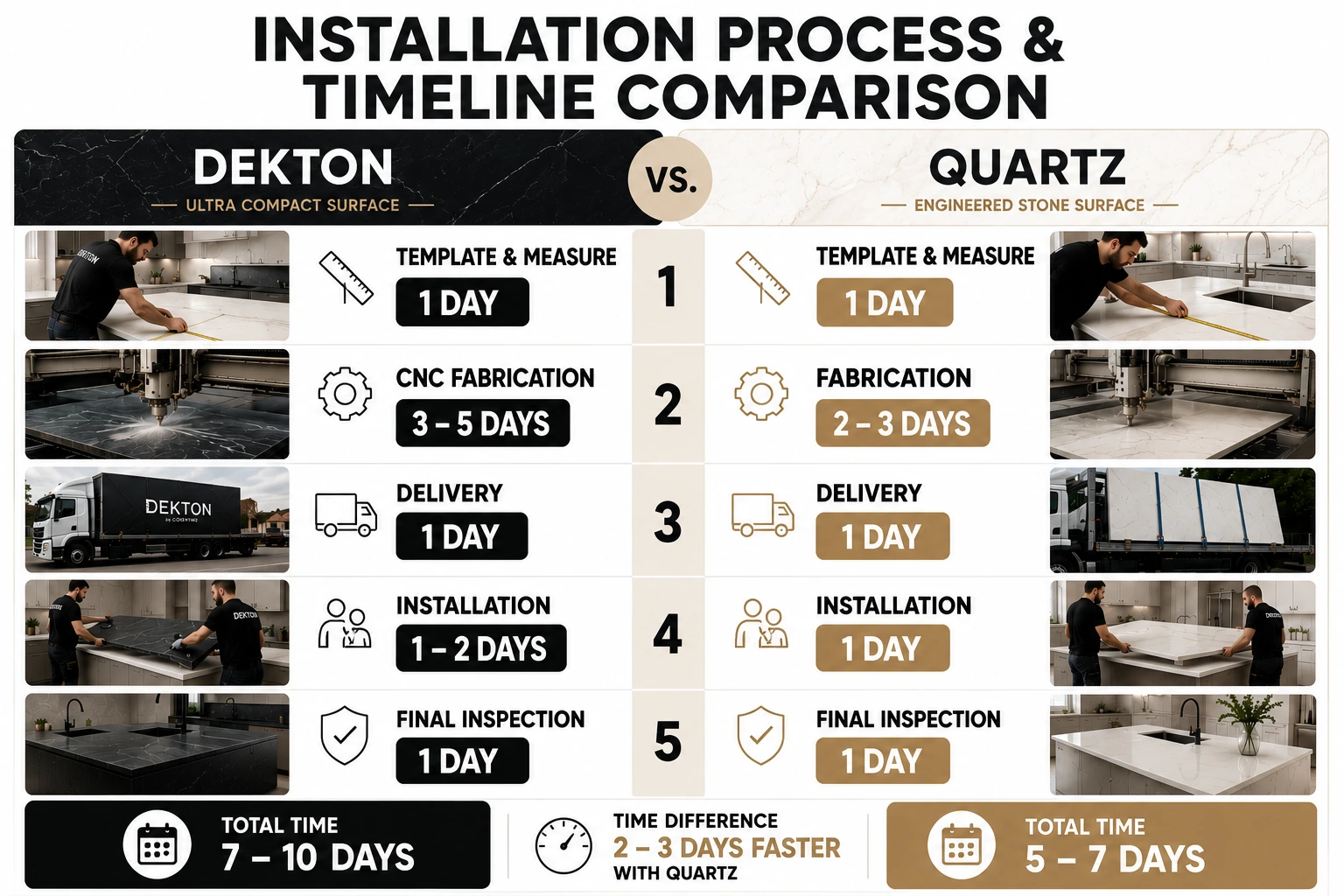
Installation Process and Timeline
Understanding the installation process for materials like Quartz and Dekton kitchen worktops helps you know what to expect at each stage, from accurate measurements and fabrication to professional fitting and completion.
Which Worktop Is Best for Different Needs?
The Dekton worktop vs Quartz comparison helps identify which surface performs better for specific needs, from durability and heat resistance to everyday practicality. The following sections highlight the ideal applications for each material and where they deliver the greatest value.
High-Performance and Design-Led Kitchens
Projects requiring precision and advanced surface performance often benefit from Dekton worktops. While Quartz worktops also perform well in high-performance and design-led kitchens, Dekton’s ultra-compact composition offers greater resistance to heat, UV exposure, and scratches, supporting bespoke kitchen designs with seamless integration and refined detailing. According to the National Institute for Occupational Safety and Health (NIOSH), engineered stone materials such as Dekton typically contain more than 90% crystalline silica, reinforcing the importance of professional fabrication and installation practices. This makes expert workmanship essential to achieving both quality and long-term performance.
Stylish and Functional Everyday Kitchens
Homeowners seeking a balance of visual appeal, practicality, and design flexibility often find Quartz worktops to be an excellent choice. Compared with Dekton, Quartz provides a wider selection of colours and patterns, making it easier to match different cabinetry styles and interior themes while still delivering reliable everyday performance. As per MDPI, manufactured using approximately 90–95% natural quartz combined with polymer resins under high-pressure vacuum vibro-compression, these surfaces achieve exceptional density, uniform colour distribution, and a non-porous structure. Their engineered construction makes them a practical solution for busy households that value both aesthetics and functionality.
Cost-Effective Project Planning
Selecting the right surface also involves considering the overall project budget and the value it brings to the space. Exploring different kitchen worktop ideas can help homeowners compare materials based on investment level, design preferences, and long-term suitability. Quartz worktops are often preferred for projects where a premium finish is needed with greater flexibility in material selection and budget planning. Dekton worktops, on the other hand, are suited to projects where a higher upfront investment is justified by advanced engineering and specialised surface technology. Evaluating budget priorities and project requirements helps determine which option delivers the right balance between cost and overall satisfaction.
Still deciding if Quartz is the right fit for your kitchen? Explore Quartz Countertops’ Myths vs. Facts to separate common misconceptions from reality and make a more confident, informed decision.
Conclusion
The perfect kitchen worktop combines lasting performance with a design that complements your space and lifestyle. Both Dekton and Quartz offer premium qualities, making the ideal choice dependent on your project’s specific requirements. At Quartz Supply, we bring over 15 years of experience in crafting bespoke worktops for homes and businesses. Backed by our 5-star Google rating, we deliver expert craftsmanship, tailored solutions, competitive pricing, and dependable service to ensure exceptional results for every project.
Bring your dream kitchen to life with expertly crafted Dekton and Quartz worktops from Supply, tailored to your style, space, and vision.
Frequently Asked Questions About Dekton and Quartz Worktops
Do kitchen worktops need professional templating before installation?
Yes. Professional templating ensures accurate measurements for cut-outs, edges, joints, and overhangs, helping achieve a precise fit and high-quality finished installation.
Will a worktop increase the value of my kitchen?
A premium worktop can enhance the appearance and functionality of a kitchen, making it a valuable upgrade that may improve the property’s overall appeal.
Do Dekton and quartz worktops require special cleaning products?
No. Both materials can generally be maintained using a soft cloth, warm water, and a pH-neutral cleaner, avoiding harsh chemicals or abrasive cleaning pads.
Can I mix Dekton and quartz in the same kitchen?
Yes. Some homeowners combine different materials for worktops, islands, or utility areas to achieve a balance of functionality, aesthetics, and project requirements.
Can you place heavy appliances on Dekton or quartz worktops?
Both surfaces can support most kitchen appliances, but installers should consider weight distribution and avoid excessive pressure on unsupported edges or corners.


