


Kitchen upgrades come in many forms, but overlay worktops for kitchens have recently become a popular choice among homeowners looking to enhance their kitchen counter without the cost and disruption of a complete renovation. Although they may appear to be a straightforward solution, their overall value depends on several important factors, including:
- The material used for the overlay,
- The condition of the existing worktop,
- Installation quality and precision,
- Durability and maintenance requirements, and
- Long-term cost-effectiveness.
Together, these elements determine whether an overlay worktop is simply a short-term cosmetic fix or a budget-conscious upgrade. In this guide, we will explore what overlay worktops are and how they perform in everyday kitchens.
Overlay Worktops: A Practical Investment OverviewOverlay worktops offer a cost-conscious way to modernize kitchens while preserving existing infrastructure. Their investment value is influenced by material choice, substrate condition, installation quality, and long-term durability. Benefits such as reduced renovation waste, improved hygiene, structural stability, and enhanced resistance to heat and wear make them particularly appealing. Quartz overlays are especially well suited to structurally sound kitchens requiring a durable, low-disruption aesthetic upgrade. |
What Are Overlay Worktops?
Overlay worktops are thin replacement surfaces designed to be fitted directly on top of an existing kitchen worktop, so you can update the look of a kitchen without ripping out the old counter first. They are usually custom-cut to fit around sinks, hobs, corners, and wall edges, and are described as one of the worktops that require minimal fit disruption in a single day. Overlay worktops can be made from several materials, depending on budget and style. Common options mentioned by suppliers include:
- Quartz,
- Granite,
- Marble,
- Concrete, and
- Synthetic or man-made surfaces.
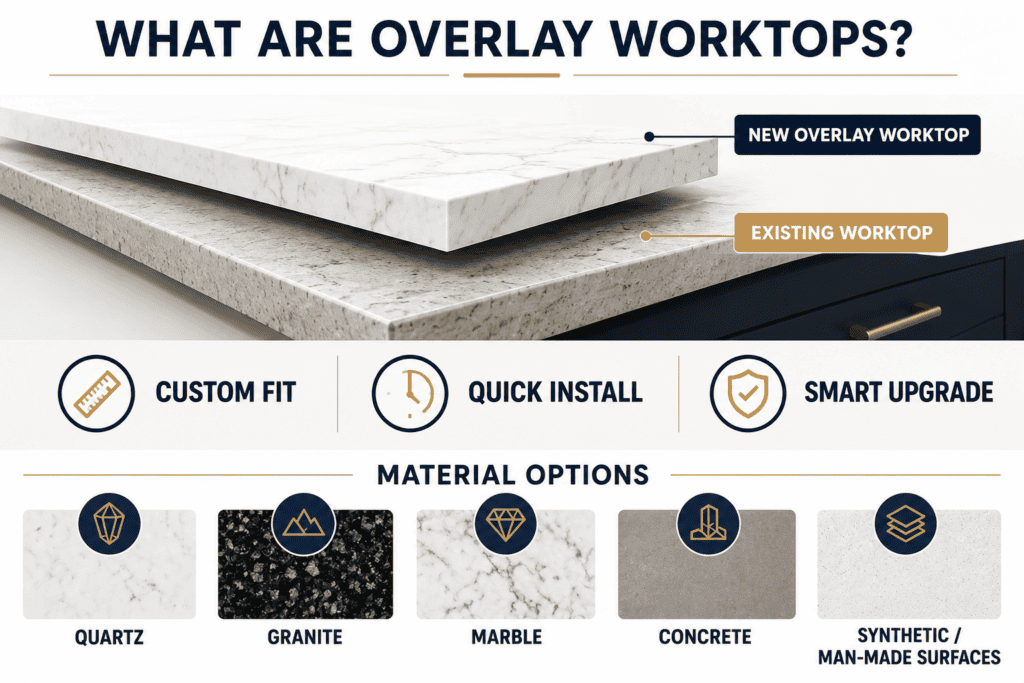
The appearance and performance of an overlay worktop also depend on its surface finish. Therefore, understanding why worktop finish matters helps homeowners choose a surface that enhances both the functionality and effectiveness of their kitchen.
Benefits of Overlay Worktops
Lower Upfront Costs with a Higher Value-to-Investment Ratio
Overlay worktops provide a financially efficient alternative to countertop replacement by utilizing the existing substrate as the installation base. Since they are fitted over an existing, structurally sound surface, homeowners can reduce renovation costs by an estimated 30–50% while achieving the look of premium materials like quartz or porcelain. This lower capital outlay, combined with long-term durability and minimal disruption, makes overlay worktops a financially efficient kitchen investment. However, homeowners exploring alternative surface options like laminate or stone surfaces can also learn about the benefits of laminate worktops or stone surfaces to better compare materials based on durability and overall suitability for their kitchen needs.
Reduced Renovation Waste
As per the European Commission’s Joint Research Centre (JRC) reports, construction and demolition waste accounts for nearly 40% of all waste generated in the EU, highlighting the need for solutions that extend the lifespan of existing building materials. Since overlay worktops reuse the existing countertop structure, significantly less material is removed and sent to landfill compared to complete replacement. Additionally, many overlay products use thinner slabs, reducing raw material consumption during manufacturing. For environmentally conscious homeowners, this makes overlay worktops a practical investment that supports sustainable renovation while delivering long-term value.
Preservation of Existing Kitchen Infrastructure
Replacing a worktop can sometimes affect more than just the countertop itself, especially when surrounding tiles, cabinets, sinks, or hobs need to be removed or adjusted during the process. Overlay worktops avoid many of these complications by being installed directly. This helps preserve the surrounding kitchen elements and reduces the chances of unexpected repairs or additional labor costs. However, there can be initial signs to replace a kitchen worktop, allowing homeowners to assess if their existing surface is suitable for an overlay installation or if a more extensive upgrade would provide better long-term value.
Improved Heat and Scratch Resistance
Many premium overlay worktops are manufactured from quartz or porcelain, both of which are engineered to withstand the demands of simple and intense cooking conditions. Porcelain overlays, in particular, are produced through a sintering process at temperatures exceeding 1,200°C, resulting in a dense surface with excellent resistance to heat, abrasion, and staining. This allows them to better withstand incidental contact with hot cookware, cutting activities, and heavy kitchen utensils without showing signs of premature wear.
Improved Hygienic Properties
Kitchen surfaces are constantly exposed to food, liquids, and bacteria, making hygiene an important consideration. Many overlay worktops feature non-porous surfaces that do not readily absorb moisture, oils, or food residues. As a result, common contaminants are less likely to penetrate the material, helping maintain a cleaner cooking environment. Additionally, the absence of periodic sealing requirements reduces maintenance while ensuring the surface remains easy to sanitize. Apart from surface cleanliness, selecting low-emission surfaces and avoiding kitchen countertops that emit VOCs can therefore support both better hygiene practices and improved indoor air quality.
|
Our collection combines durability and hygienic surfaces, helping you update your kitchen efficiently while preserving your existing worktops whenever possible. |
Is a Quartz Overlay Right for Your Kitchen?
A quartz overlay is best suited to kitchens where the existing worktop is free from major issues such as cracks, water damage, warping, or movement. For homeowners considering replacing an old kitchen worktop, quartz overlays offer an alternative approach by using thinner slabs (typically 8–15 mm) that are fitted over the existing surface with minimal structural intervention. They are particularly effective for laminate, timber, and solid-surface countertops. However, they are also suitable for rental properties, resale preparation, or kitchens where the layout already works but the countertop needs an aesthetic improvement.
Conclusion
So knowing if an overlay worktop is a good investment ultimately depends on how well it balances cost, performance, and longevity for your specific kitchen. Thus, understanding the factors that influence its value makes homeowners’ renovation decisions easier. At Quartz Supply, we specialize in premium quartz overlay and worktop solutions, helping homeowners invest in surfaces that offer an optimal balance of durability, aesthetics, and long-term performance.
| At Quartz Supply, we can assess your existing kitchen worktop, discuss suitable overlay options, and recommend a solution tailored to your space, style preferences, and budget. |
Frequently Asked Questions About Overlay Worktops for Kitchens
Can overlay worktops be installed around undermount sinks?
Yes, provided the sink cut-out is accurately fabricated and the existing support system can accommodate the overlay thickness.
Will an overlay worktop increase the height of my countertop?
Yes, most overlays add a few millimeters to the existing surface, which may require minor adjustments to upstands or appliance clearances.
Can I install an overlay worktop over tiled countertops?
In some cases, yes, but uneven grout lines and loose tiles must be addressed to create a suitable installation surface.
Can an overlay worktop improve the visual consistency of a kitchen?
Yes, overlay systems can conceal mismatched or dated countertop surfaces, creating a more cohesive and uniform appearance throughout the kitchen space.
Can overlay worktops be installed in older homes with uneven walls?
Yes, professional installers can template and scribe the material to accommodate minor wall irregularities for a precise fit.


